
Who We Are
When you need answers, Precision Epigenomics delivers with early multi-cancer detection.
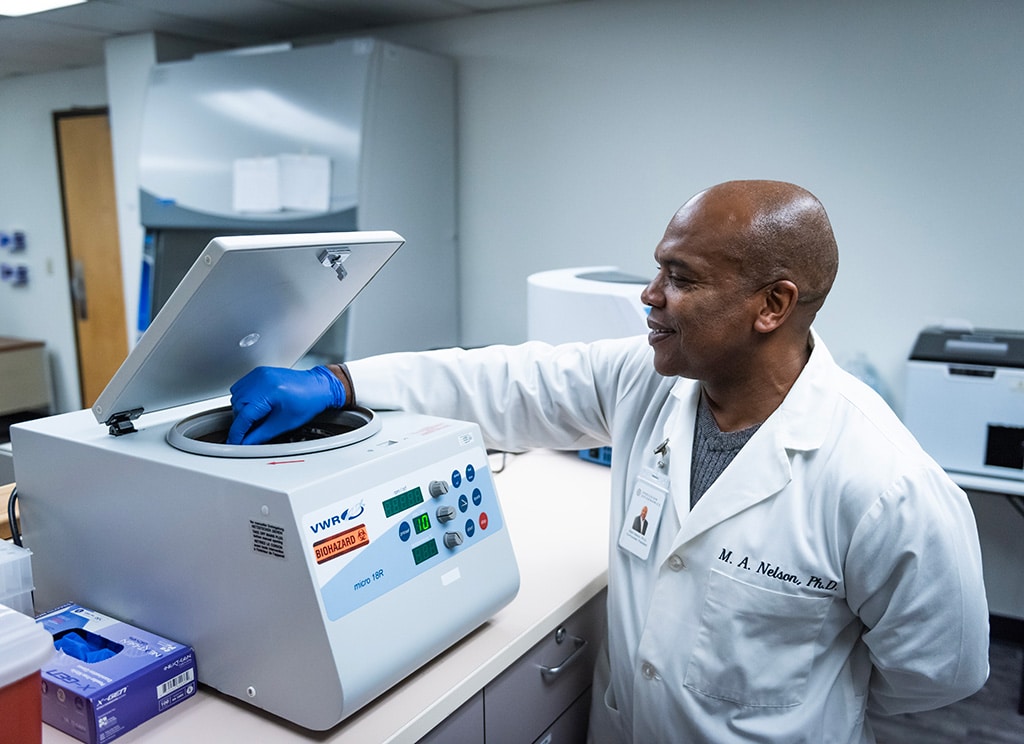
Precision Epigenomics is committed to transforming healthcare with cutting-edge technology that identifies multiple cancer types at their earliest stages through a simple liquid biopsy.
Driven by excellence and compassion, EPISEEK™ tests are fast, reliable, and affordable, giving patients the peace of mind they need about their health and future. We are more than just a business; we are a team devoted to enhancing your well-being.
Meet Our Leadership Team

Mark A. Nelson, PhD
Co-Founder, President, CEO, Board Member

Matthew H. Miller, CPA
Chief Financial Officer

Richard Bernert, MD
Chief Operating Officer

Joshua Routh, MD
Laboratory Medical Director

Lisa Shaffer, PhD
Board Member

Marie Wesselhoft
Board Member
Frequently Asked Questions
WHAT IS EPISEEK?
The Precision Epigenomics Liquid Biopsy Test, EPISEEK, is a blood-based test designed to accurately assess DNA shed by tumors called circulating tumor DNA (ctDNA) to detect cancer from a simple blood draw. We analyze epigenomic modifications present on the ctDNA. Special software is used to analyze the results and aids the pathologist to issue a report that specifies if an abnormal signal is detected or if no cancer signal is detected.
WHAT ABOUT FALSE POSITIVES?
EPISEEK is a screening test designed to identify asymptomatic patients. Screening tests are designed to rule in a disease state and to minimize false positive results in healthy individuals. This test may not perform as well in patients with a personal history of cancer or with symptoms or clinical findings that make cancer more likely.
DOES EPISEEK PREDICT MY RISK OF DEVELOPING CANCER?
No. The Precision Epigenomics Liquid Biopsy Test does not screen for hereditary risk of developing malignancy. It is designed to detect the presence of malignancy.
WHICH PATIENTS CAN TAKE EPISEEK?
As with many cancer screening guidelines, our Liquid Biopsy Test is recommended for use in adults aged 45 or older. Patients younger than 45, but with elevated risk factors might also benefit from testing. EPISEEK testing is not recommended for patients younger than twenty-one, those who are pregnant, or those who have an active known malignancy, or are currently being treated for cancer.
WHY ARE CONVENTIONAL RECOMMENDATIONS FOR CANCER SCREENING STILL APPROPRIATE IF A PATIENT TAKES EPISEEK?
The test should not be considered a replacement for routine cancer screening such as colonoscopy, mammogram, and cervical cancer screening. Healthcare providers and their patients should continue to follow guideline recommendations for cancer screening.
WHO CAN ORDER EPISEEK?
An appropriately licensed medical provider who cares for the patient including MD, DO, DDS, DPM, OD, NP, DC, and PA.
IS EPISEEK RECOMMENDED IN CANCER SCREENING GUIDELINES?
Liquid biopsy for multicancer detection is not yet recommended by major cancer screening guidelines or by the US Preventive Services Task Force (USPSTF).
WHAT IS THE RECOMMENDED SCREENING INTERVAL FOR EPISEEK?
Annual health exams may be an appropriate time for a multicancer detection test such as our Liquid Biopsy Test, but patients are encouraged to discuss screening with their healthcare provider to determine an appropriate interval given their unique healthcare considerations. There are no specific guidelines on liquid biopsy multicancer detection liquid biopsy tests.
WHERE IS THE TEST CURRENTLY AVAILABLE?
The test is currently available to most patients in the United States. We cannot currently accept samples that were collected in New York State.
Cost & Coverage
HOW MUCH DOES EPISEEK TESTING COST?
The fee of $699 includes the test collection kit, the transportation materials, the delivery of the kit to the provider’s office, the return domestic overnight shipping to our clinical laboratory, the analysis, the interpretation with a final report from one of our Board-Certified pathologists, and consultation with the ordering HCP.
CAN PATIENTS USE THEIR HSA OR FSA TO PAY FOR THE TEST?
In general, yes, but because policies vary among HSA and FSA administrators, patients should contact their insurance companies or plan administrators for details on using their accounts for EPISEEK testing.
Test Ordering & Logistics
HOW CAN A LICENSED HEALTHCARE PROVIDER ORDER EPISEEK FOR THEIR PATIENT?
Test kits can be ordered through the TruDiagnostic provider portal. Immediately before a sample is collected, the kit must be registered to a particular patient through the TruDiagnostic portal.
WHAT ARE THE SPECIMEN REQUIREMENTS FOR EPISEEK?
A peripheral blood specimen, collected by phlebotomy in the provided 10 ml collection tube(s), is needed for analysis. The patient need not be fasting. Because the laboratory intends to process the specimen the day after collection, specimens should be collected and submitted only on days which precede workdays (typically Monday through Wednesday, excluding holiday weekends). Specimens must not freeze, and they should be stored and transported at 37-87°F.
A specimen will be rejected if it is: submitted in blood collection tubes other than the provided Streck Cell-Free DNA tube(s), submitted in expired collection tubes, less than 10 ml total, not properly labeled with two unique identifiers or is illegible, hemolyzed or clotted, not received within 48 hours of collection, or not accompanied by a complete order.
HOW SHOULD THE COLLECTION KITS BE STORED?
The supplied kits with its contents may be stored at room temperature. The Streck tube lot and expiration date are printed on the box exterior for easy kit management. The gel packs may be refrigerated but should not be frozen.
DO PATIENTS NEED TO FAST OR OTHERWISE PREPARE FOR THIS TEST?
No special preparation, pausing medication, or fasting is required. Other blood collection tubes for other tests collected at the same time will not interfere with EPISEEK. High Intensity exercise within 6 hours prior to specimen collection may impact test results so this should be avoided.
WHEN WILL MY PATIENT’S TEST RESULTS BE READY?
In most cases, the test results are available in about 1 week from arrival in our laboratory.
HOW WILL I RECEIVE THE TEST RESULTS?
As with other test offerings through TruDiagnostic, the result will be available through the provider portal.
Results Interpretation
WHAT ABOUT THE PERFORMANCE OF EPISEEK?
In a validation study, EPISEEK was positive in 65% of samples from patients with known active cancer and negative in >98% of patients with no known history of cancer. For adults 50 and older, the positive predictive value is estimated to be 40% and negative predictive value 99%.
WHAT DOES “CANCER SIGNAL NOT DETECTED” MEAN?
We designed EPISEEK to detect abnormal methylation patterns which may be present as circulating tumor DNA in the blood of patients with cancer, but not present in normal blood or other tissues. In this case, the test did not detect these characteristic DNA methylation abnormalities. EPISEEK was not designed to detect all malignancies.
Not all cancers have enough abnormal DNA circulating in the blood to be detected. While EPISEEK was designed to be sensitive, a “Cancer Signal Not Detected” result does not completely rule out the presence of cancer. Patients who receive a “Cancer Signal Not Detected” result should continue with standard of care screening options at intervals appropriate for that individual.
WHAT DOES “INDETERMINATE SIGNAL DETECTED” MEAN?
We have designed EPISEEK to be sensitive to detecting a wide variety of cancers and created its algorithm to minimize False Positives. For a very small number of patients, the signal may be more abnormal than in most healthy patients, but not as high as in patients with clear cases of cancer. In this setting, we may issue an interpretation of an “Indeterminate Signal Detected.” For these patients, additional diagnostic follow-up is recommended, but this group will likely have more False Positives than the “Abnormal Signal Detected” category.
WHAT DOES “ABNORMAL SIGNAL DETECTED” MEAN, AND WHY DOES IT NEED TO BE CONFIRMED WITH DIAGNOSTIC TESTING?
Screening tests usually do not diagnose cancer. They are designed to detect possible cancer in an otherwise healthy population. For example, a screening mammogram may find a density in the breast. That lump may or may not be cancer. An elevated Prostate Specific Antigen (PSA) level might be found as part of a man’s wellness check. It might be due to cancer or inflammation. Similarly, if a screening test such as EPISEEK is abnormal, more tests may be done to determine if cancer is present. We designed EPISEEK to be a screening test, not a diagnostic test.
WHAT DIAGNOSTIC TESTS SHOULD BE ORDERED TO CONFIRM A DIAGNOSIS FOR AN “ABNORMAL SIGNAL DETECTED” RESULT?
The evaluation of a patient with an abnormal screening test result, such as “Abnormal Signal Detected” by EPISEEK must be managed by the patient’s qualified healthcare provider. This may include a detailed history and physical examination with special attention to known risk factors, additional laboratory studies, and studies such as PET/CT imaging, among other diagnostic maneuvers.
WHAT IF THE DIAGNOSTIC WORKUP SHOWS NO SIGN OF CANCER FOR A PATIENT WITH A “ABNORMAL SIGNAL DETECTED” RESULT?
All screening tests, including our Liquid Biopsy Test, are susceptible to false positives (“Abnormal Signal Detected” when no cancer is present). However, because EPISEEK was designed to detect early malignancies, there may be a small cancer that cannot yet be detected clinically. An additional test in 3-6 months may be of benefit. Please contact our Medical Director to see if an additional test may be run at no further cost to the patient if a thorough workup is negative.
WHAT DO I DO IF I RECEIVE A “CANCELED” TEST RESULT?
For a variety of reasons, such as a hemolyzed specimen, unlabeled specimen, insufficient specimen quantity, delayed transportation, or technical difficulties in the laboratory, the specimen may be reported as Canceled. Please contact our laboratory, (520) 372-7522 or [email protected], to coordinate submission of an additional specimen to be tested.
WHERE CAN I FIND MORE INFORMATION ON THE TEST AND PATIENT INFORMED CONSENT?
We understand the importance of providing comprehensive information to patients regarding the testing procedures and results.
For individuals seeking comprehensive information about the test and the associated informed consent, both patients and clinicians can turn to our Terms of Service. There, you can access easy-to-understand resources explaining the nature of the test, its benefits, and any potential risks involved. Additionally, the Terms of Service and Precision Epigenomics’ website provides comprehensive details on the informed consent process, and the EPISEEK test, empowering individuals to make well-informed decisions about their healthcare.
We encourage both patients and clinicians to review in depth our Terms of Service and Informed consent available at: precision-epigenomics.com.